


Solsiden 8
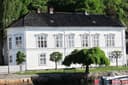
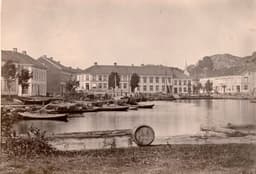
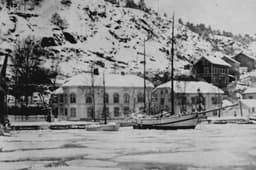
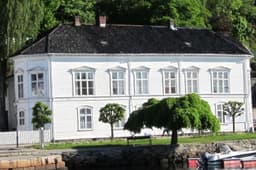
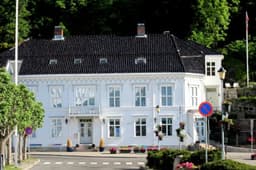
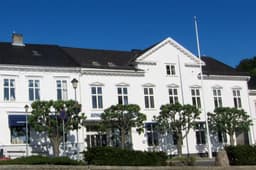
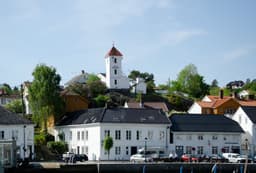
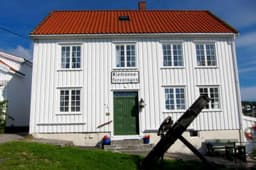
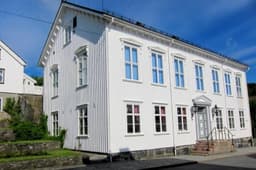
You are now standing in front of Solsiden 8, one of the most beautiful houses along the harbor in Risør.
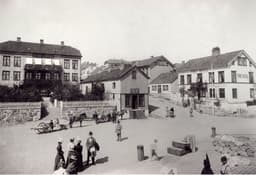
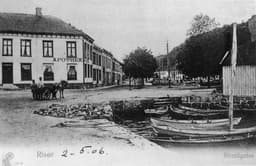
The house was built after the town fire in 1861 by Stian Herlofsen Finne. He was one of the city's major entrepreneurs: a merchant, shipowner, sawmill owner, and ice exporter. He also owned the Holmen shipyard. In other words, this was not just a private home. It was the house of a man whose business was closely tied to the sea, trade, and everything that went on right outside the windows.
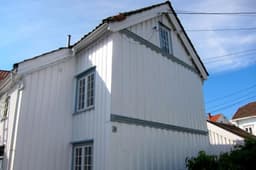
Notice how calm and symmetrical the facade is. Solsiden 8 is considered one of Risør's best examples of "late Empire style". That doesn't mean the house is elaborately decorated, but rather that it has a strict and dignified form. Look at the window frames, the corner boards reminiscent of pilasters, and the carved beam ends under the roof. Everything is quite restrained, but nothing seems random.
Right now, the house is in the midst of an extensive restoration process that has been ongoing for several years. As the work has progressed, many original details have resurfaced, and several of them have been recreated. This makes Solsiden 8 a great example of just how much history can be hidden in an old wooden house – behind newer layers of paneling, paint, and renovations.
Solsiden 8 is also closely tied to its neighboring house, Solsiden 10. The two houses almost form a pair in the street view, and together they show how this part of the city was rebuilt after the fire: light, tidy, and representative, with the sea as their closest neighbor.
It's also worth looking up towards the hill behind the house. In the 1870s, Stian Herlofsen Finne and his wife Clementine Carstensen built the Swiss-style villa "Furuly" in Urheia. At that time, there was no road leading up to it. The access went from Finne's property here at Solsiden 8 and up the steep hill. That says a bit about how the large properties in Risør could stretch from the harbor and up towards the viewpoints over the city.