


Solsiden 10
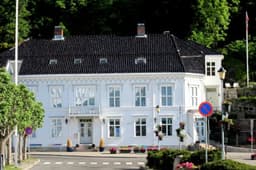
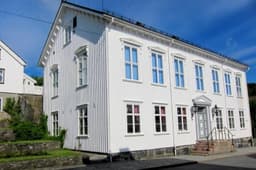
You're now standing in front of Solsiden 10. At first glance, it may look like an old, stately townhouse from Risør's heyday. And in many ways, that's exactly what the story here is about – with just a small caveat.
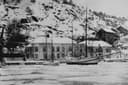
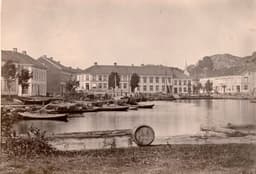
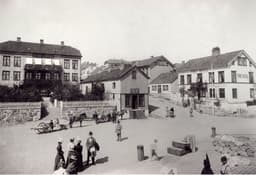
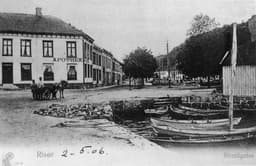
The original house was built in 1861, the same year as the great town fire left large parts of Risør in ruins. After the fire, the town had to be rebuilt, and that didn't happen entirely by chance. The streets became wider, the houses got more space around them, and Risør eventually got the bright and tidy wooden house characteristic we know so well today.
Solsiden 10 was part of this reconstruction. The house was built for Mrs. H. D. Carstensen as a respectable townhouse – a home that was clearly meant to belong among the city's more affluent bourgeoisie.
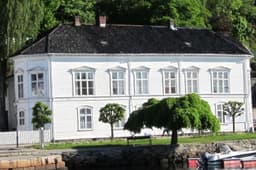
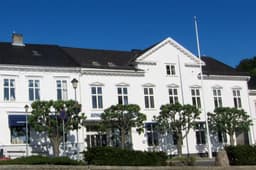
Notice the facade. The broken corners, the ornaments, and the cornice give the house a quite stately demeanor towards the street. It's not ostentatious, but it's not modest either. It says, in a calm way: this is where people with status, means, and faith in the future lived.
Solsiden 10 is also closely connected to its neighboring house, Solsiden 8. The two stand almost as a pair of buildings, and together they provide a good image of how Risør's bourgeoisie wanted the town to look after the fire: respectable, harmonious, light – and with a clear sense of status.
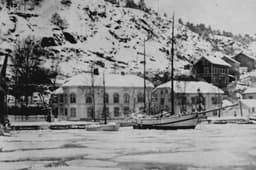
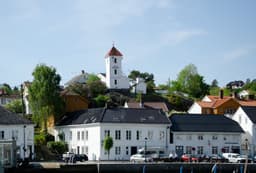
And the location was, of course, not coincidental. The people who lived here didn't just have a view of the harbor. The ships lying right outside their windows could be their own – a visible part of their wealth and business. From the living rooms on the second floor, they could keep an eye on what was the very foundation of Risør's prosperity: the maritime trade.
But the house you see before you today also tells a more recent story of loss and rebirth. In 1992, Solsiden 10 burned down. When it was later rebuilt, the decision was made to recreate the main façade facing the street as a copy of the old house, even though the building behind the façade is a modern construction.