



Introduction - Torvet
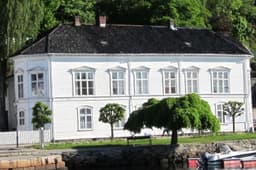
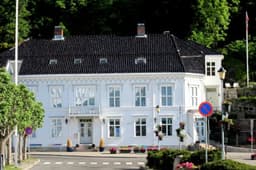
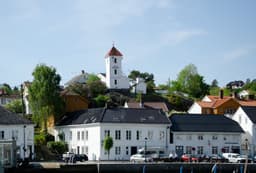
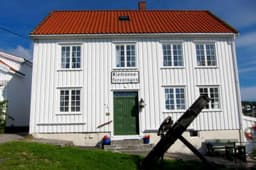
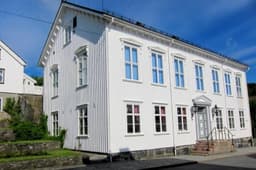
On this tour, we'll explore some of the beautiful wooden houses that make Risør one of Europe's best-preserved wooden house towns. The town is known for its picturesque harbor – surrounded by stately, white-painted houses, steep rocky outcrops, and the archipelago beyond.
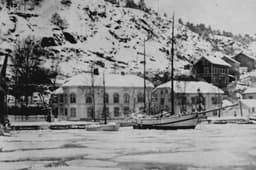
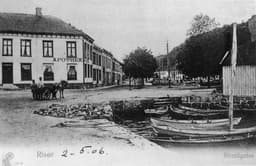
Risør has always turned its face to the sea. It was here, in the harbour, that the town lived. It was here that the boats arrived, the goods were unloaded, the people met, traded, worked – and set out into the open sea, towards the great wide world.
But in Risør, a clear divide exists between the time before and after the great town fire in June 1861.
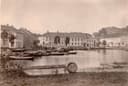
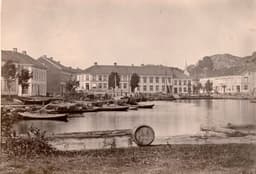
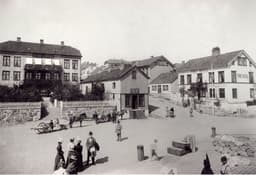
As you stand here on today's open town square, with wide streets and a well-ordered town around you, you can try to envision the harbor as it was before that catastrophic June night.
Back then, the buildings were packed much more closely together. Warehouses, boathouses, and merchant's stores crowded all the way down to the water's edge. The boats were moored tightly in the harbor. Between the houses, narrow alleys, tight passages, gangways, and stairways wound their way through.
A canal stretched in from the sea, up past the area where Vinmonopolet stands today. There was life all around. The smell of the sea, tar, smoke, fish, and goods being loaded and unloaded. The sound of handwork and trade.
Risør was a maritime town that had grown organically out of wood over the years. And that's precisely what made it so vulnerable. On the night of June 5, 1861, a fire broke out in a bakery down by Torvgata. The wind was coming from the southeast, dry and strong.
A small flame caught hold, and in the densely wooded town, the fire spread quickly. House after house caught fire. The flames ran through the alleys and up the streets. People shouted to each other. The church bells rang. Some tried to save their belongings. Others carried water. Many just had to get away.
For fourteen hours, the town was ablaze. When the smoke finally settled, 248 buildings were gone. Four-fifths of Risør had vanished.
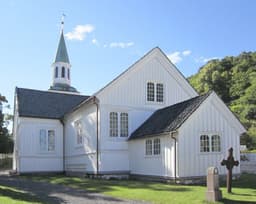
But amidst the catastrophe, a miracle occurred: no human lives were lost, and the 17th-century Risør Kirke remained standing. For this, we owe a great debt of gratitude to the women of the town, who carried buckets of water to save the church, as many of the town's men were out at sea at the time.
At this point, Risør was a town with ample resources. It was home to shipowners, merchants, captains, and craftsmen. The shipping industry had brought the town prosperity, and after the fire, this energy was channeled into rebuilding – quickly, solidly, and with ambition.
The new town had wider streets, more orderly quarters, and a more planned structure. Not just to look nice, but to make the town safer. The distance between the houses, the more open street layouts, and the clearer organization were meant to contribute to preventing another fire from engulfing the entire town as easily.
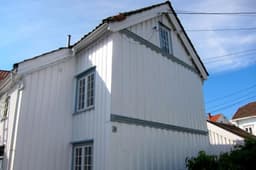
Many of the houses we'll be seeing today belong to this rebuilt town. Yet, we'll be searching for the remnants of the old town – the one that vanished in the flames, and which had existed since the early 17th century.